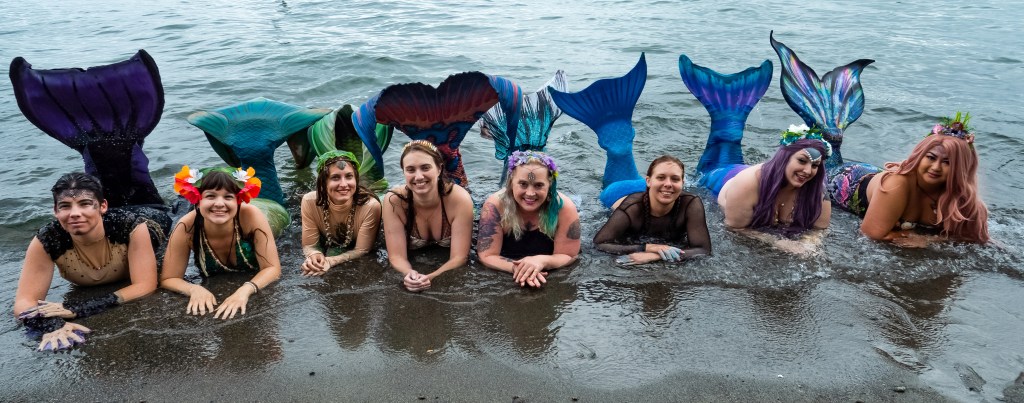
Mythical beings from under the waves are coming to shore near you! Merfolk can be all kinds of creatures, mermaids, mermen, tritons, naiads, sirens, selkies, all sorts of colorful beings. Some of us can transform and walk on land, some of us may visit the human world only for a short time before returning to the water. We love to learn, and to share our knowledge and talents with the human world. Our community enfolds musicians, dancers, actors, artists, divers, athletes, teachers, scientists, crafters, and all sorts of professionals. One thing we all have in common is our tails- we have each learned to swim in our aquatic form, with a tail. We also care very much about the natural world we live in, protecting the water and creatures who live in it with us.
Are you someone who wishes to swim in a tail too?
There are many ways to wear your very own fins, but before you dive in, there are some important things for you to learn about swimming in a tail safely. Keep reading to discover some of the info you’ll need to start your own merfolk journey.
What is a monofin?
You will need a monofin to swim like merfolk do. A monofin is the main swimming equipment that attaches to your feet when you swim in a tail, similarly to flippers. It is inside of the fluke part of a mer tail, and it is the part that propels you through the water. Monofins can be stiff or soft, but must be made of sturdy and well tested materials, because if it were to break or malfunction, you could be seriously injured. If you’re swimming in a fabric tail, you must always use a monofin- an empty tail with no propulsion is a drowning risk.
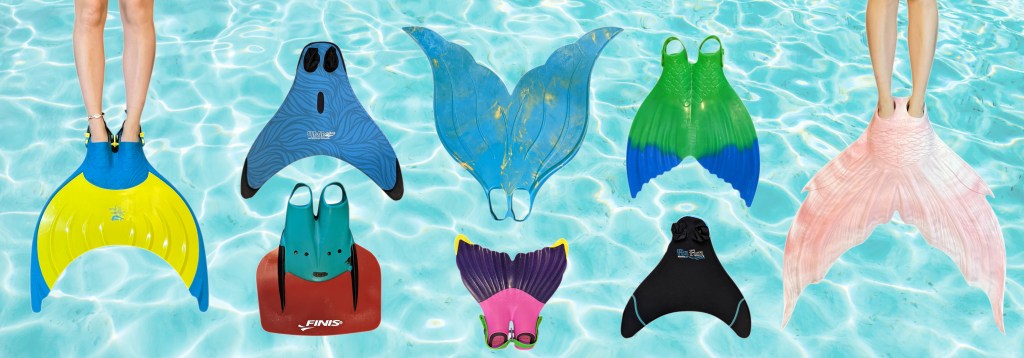
A Monofin should:
- Have sturdy foot pockets that securely enclose and fit your feet
- Be made of a material that is flexible, strong, and safe for underwater use
- Be thoroughly tested and well reviewed
- Be made by a company that has specific product knowledge about safe diving and swimming
- Propel you through the water as fast or faster than your normal swimming speed
A monofin should NOT:
- Be made of anything sharp, brittle, porous, or unnecessarily heavy such as plexiglass, metal, or fabric.
- Allow your feet to slide around inside the foot pockets
- Attach to your body in a way that you can’t easily remove it to escape in an emergency
What is a Tail Skin?
A tail skin is the outside garment part of a fabric tail that covers your swimwear, legs, and monofin. Most are made of stretchy swimmable fabrics such as spandex, scuba knit, or neoprene. As a beginner, it is highly recommended to start with a fabric tail skin, since other types of tails (such as those made of resin scales or silicone) can be much heavier and more movement restrictive, and it is safer to learn and develop the skill of tail swimming before adding those challenges (and costs!). Some tail skins have vinyl inserts that form a large decorative fluke shape, and these are meant to be worn in addition to a monofin (never without one).
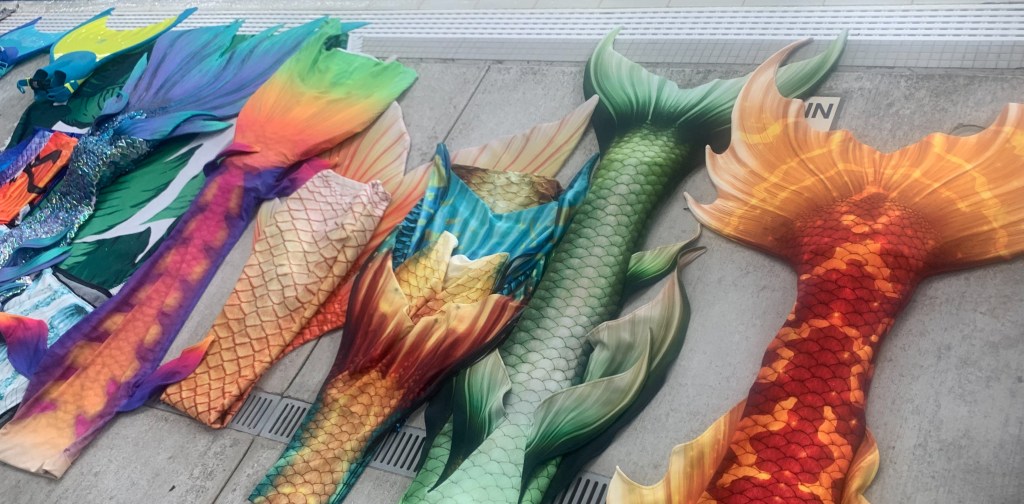
A tail skin should:
- Be the right size for you, so that you can put it on and take it off comfortably
- Be made of stretchy, lightweight, water-safe fabric
- Stay strongly sewn together for the duration of swimming, and resist tearing
- Open and close to allow you to remove your monofin, either through an opening at the bottom of the fluke, or a zipper
A tail skin should NOT:
- Be made of stiff, fluffy or fibrous fabric that can shed, become sodden and heavy, trap mold and bacteria, or fail to stretch with movement
- Have weak seams that can pop or rip easily
- Lack the capability of wearing a safe monofin
- Shed anything into the water, such as fibers, sequins, glitter, dye, paint flakes, or loose thread. (*Very important, as shedding could damage other swimmers’ skin and eyes, pool filters, fish, sea life and coral!)
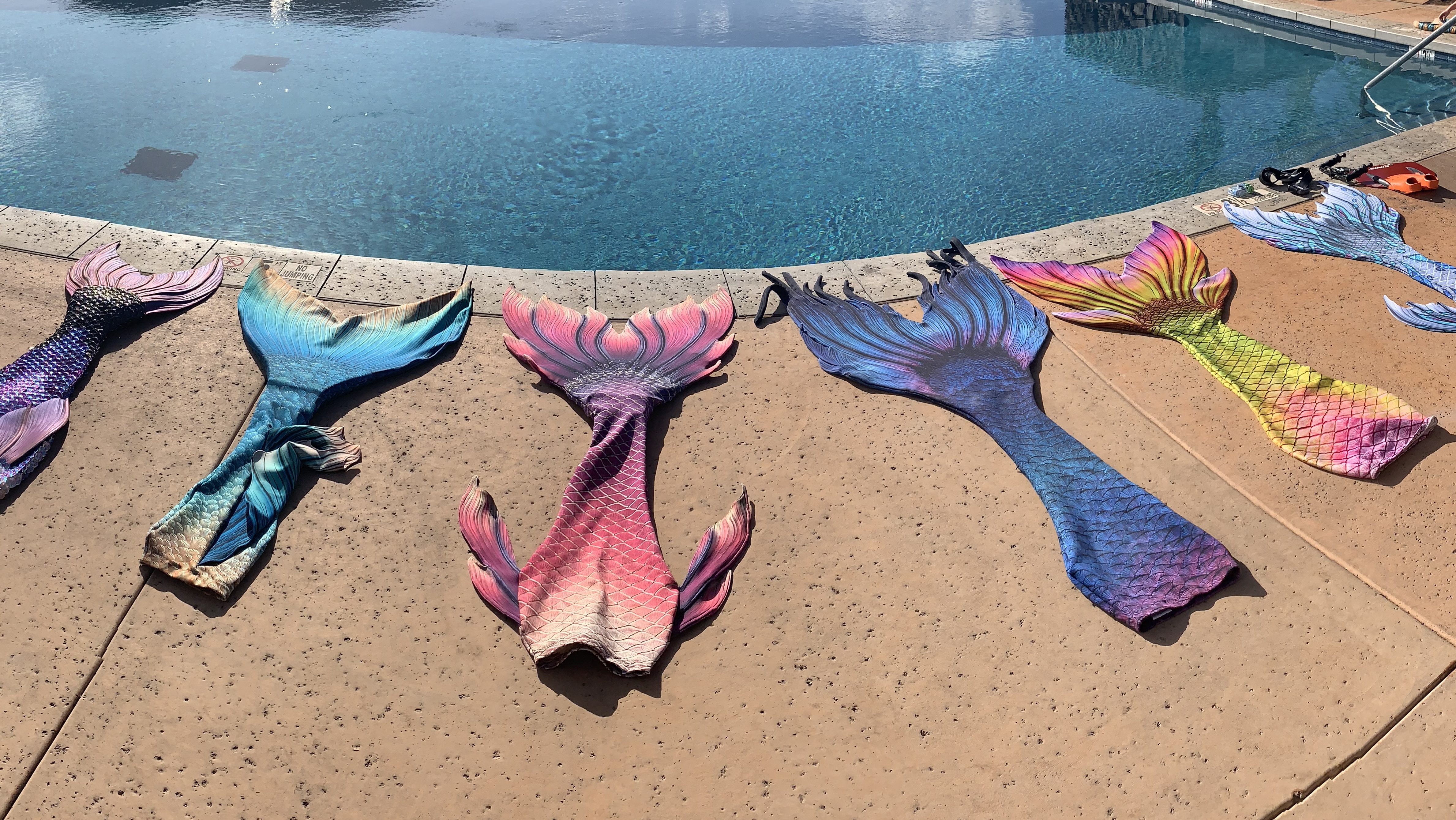
Other Tail Types
As you progress in your mer-journey, you will notice that there are more types of tails that are used by seasoned tail swimmers, professionals, and models. These can be made of high grade fabric, resin scale tiles, skin-safe silicone, or hybrid combinations of these. Many of these tails are custom made for the wearer’s body measurements, and fuse the tail skin and monofin into one seamless piece. Because of the materials and increased production skill and time, these tails can be very costly, and should be carefully reviewed for safety, consumer satisfaction, material grade, and ethics before purchasing.
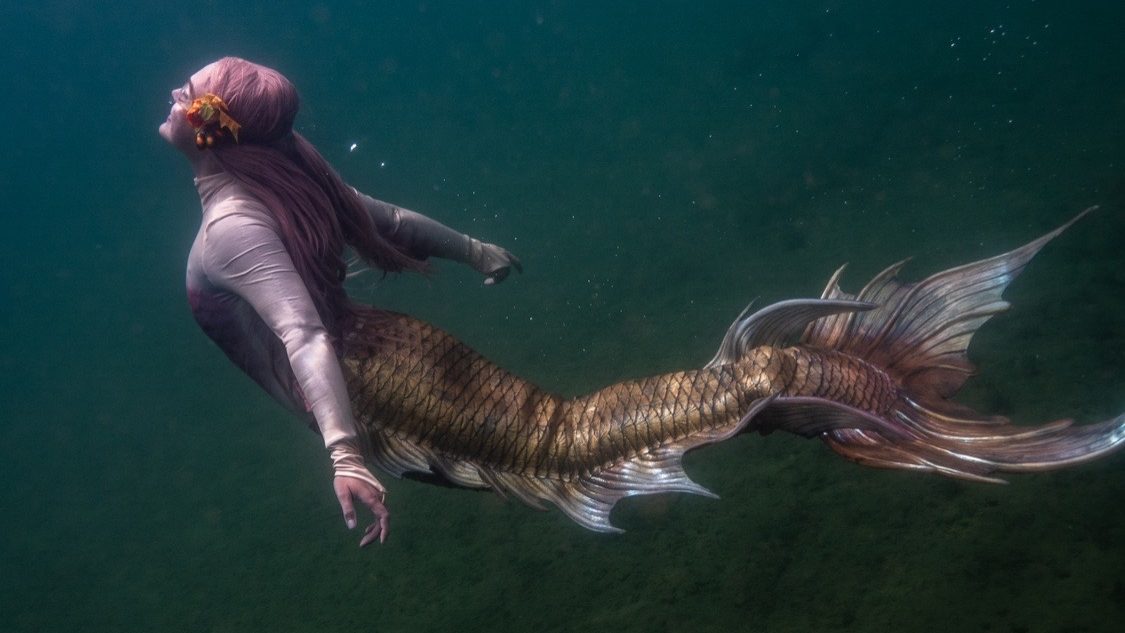
Swimming in a tail
Underwater tail swimming can be utterly magical! To learn, start by putting on your tail while sitting down, and never try to hop or walk on land when your tail is on. Then, you will need to practice techniques such as diving underwater, treading water, and doing the dolphin kick. Make sure to stay in a safe area- where you can touch the bottom or wall if you need to, where you won’t be crowded by other swimmers, and where currents and temperature won’t interfere with your safety. You can learn in a swim school, in specific merfolk classes, with your local pod, or even on your own as long as there’s a lifeguard and you have permission from the venue. Even if you’re the only one in a tail, never swim alone!

The Mer World
Merfolk are surfacing in every corner of the globe, and you can join this very fast-growing community. Online, many discussion and interest groups exist, on social media platforms, in dedicated websites, and in online blogs and magazines. In person, merfolk meet at conventions, festivals, competitions, and often local pods and meetup groups. A quick internet search of your area’s “mermaid pod” or “mermaid conventions” will likely give you a place to start!
Tail Design Copyright and Art
Merfolk are an intensely creative community, and can often be fiercely loyal to and protective of artists they appreciate. Many of the artists and tail designers that you can buy from are merfolk themselves, and work hard to support their creative businesses, so it’s important to know if you are purchasing an original product when you buy tails or gear. If a tail skin uses an unauthorized copy or reprint of another artist’s design, it is copyright infringement, which is illegal in the United States, and really hurts the original artist’s business. Unfortunately, copyright infringement (often referred to as “art theft”) is rampant in the mer-tail marketplace, especially in “fast fashion” or cheap import sales. If you are buying from an online marketplace with a variety of vendors, or from a company that is not a well established original art producer, be very cautious of whether or not the design you like is a “knockoff” copy of another maker’s original work. It can be tempting to choose these products due to their low prices, but beware that if you do purchase a copyright-infringing tail, be prepared to receive a low-quality product, and potentially angry reactions from the rest of the mer-community! One of the easiest ways to check the legitimacy of a product is to ask in one of the online merfolk groups. Other questions you can ask yourself are:
“Is this tail made by a company that only makes merfolk tails and related swimming gear?”
“Is this price reasonable for the quality standards of the product that I expect?”
“Is this tail imported from a country that doesn’t have strict copyright protection laws?”
Additionally, buying low-cost tails from un-vetted companies can often mean that you’re getting an unsafe product, even if it is an original design. Unsafe product issues that have been reported in the past include breakable monofins that can shatter and cut your feet, poor equipment design that allows feet to slide around or doesn’t propel you properly (drowning risk), seams that can rip and trap your feet or legs, or poor quality materials that will fall off your body, pinch you or give you blisters or rashes, shed harmful fibers or particles into water, or break or tear after one use. Naturally, most merfolk don’t want these drawbacks to happen, or be associated with the hobby we are so passionate about!
Open Water Safety
Once you have become a strong swimmer in a tail, you may wish to try swimming in the wild. When you make your plan, it’s important to be aware of the environment you’re entering. First, you should check that the tides, currents, and temperatures are safe for your swimming abilities, and be sure to stay with a buddy. If in doubt, don’t go out. Also, be aware of the local laws and guidelines on wildlife encounters. Both freshwater and saltwater bodies contain creatures whose populations are protected, and should not be approached, fed, or touched. Also, some wildlife can sting, poison, bite, or otherwise harm you, so it serves you well to be cautious and knowledgeable. Lastly, be careful not to disturb or destroy plants, coral, or other habitat structures. Efforts to be ecologically sensitive and proactive are widespread in the merfolk community, and we invite you to share our collective care for our special, magical underwater world.

 Emerald Sea Sirens